
Introduction
You might be wondering why we need to talk about being more inclusive.
For a long time, many people with disability were not given equal opportunities to be present in everyday community life.
CRU believes that people living with disability should be supported as active and valued contributors to family, community and economic life. We know that this benefits the entire community.
Things have improved a lot, but many people with disability still experience:
- negative assumptions,
- physical and communication barriers,
- lower expectations from others
This page provides ideas, stories and frameworks to help us be more inclusive and welcoming as communities.
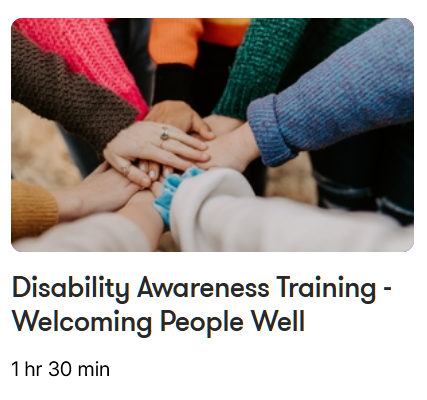
Disability Awareness Training
E-module
Disability Awareness Training
Community Resource Unit Ltd.
Completion of CRU's Disability Awareness E-Module will assist you to understand the importance of being inclusive and build the capacity of your group, club, team or organisation to be welcoming and inclusive of all people.
Topics
- Know what it means to belong and live a good life in the community
- Understand the basics of inclusion and exclusion and why inclusion is important for people with disability
- Be introduced to principles of inclusion
- Think about practical things we can all do to feel more confident to welcome and include people with disability
Course Details
This course is self-paced, taking approximately 1.5 hours to complete. It is delivered online and provides a certificate of completion upon finishing the course.
Rights
Respect, inclusion and supporting freedom of choice are not ‘nice ideas’ or acts of goodwill — they are legal rights.
Under the United Nations Convention on the Rights of People with Disability (UNCRPD), governments, services and systems are required to uphold dignity, autonomy and the full inclusion of people with disability.
Upholding rights isn’t optional, it’s the standard we must meet.
Video
Rights Under the UN Convention on the Rights of Persons with Disability (UNCRPD)
Disability Advocacy Resource Unit (DARU)
This video by the Disability Advocacy Resources Unit (DARU) introduces some of the key concepts of the UNCRPD.
(Video Duration: 2m 26s)
Video
Let’s Talk About Disability
Australian Human Rights Commission
This video presents a brief history of the disability rights movement and suggests ways that we can make the world more inclusive.
© Australian Human Rights Commission 2017.
(Video Duration: 3m 24s)
Video
We need to talk about disability
Senator Jordan Steele-John
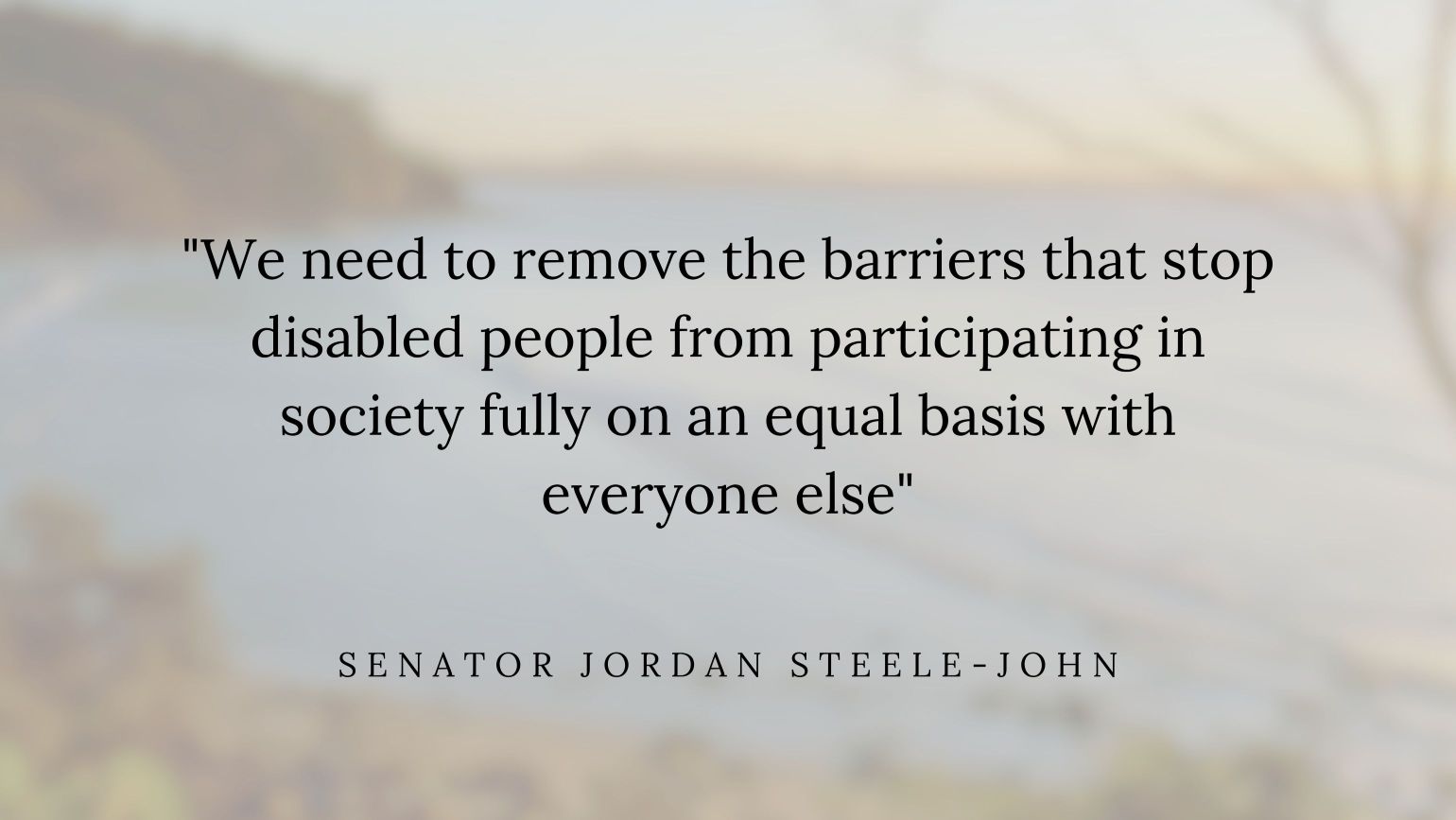
The social model of disability says that disability is caused by barriers in society. In this video, Senator Jordan Steele-John unpacks this idea and explains that we need to remove barriers that stop people from participating.
(Video Duration: 2m 24s)
Universal Design
Universal design is about making places, products, communication and services easy for everyone to use. It requires thinking and planning ahead, so that people of all ages and abilities can take part without barriers. If you design this way, then it will minimise the need to retrofit later.
Example: A shopping centre with automatic doors and ramps helps people in wheelchairs, parents with prams, older adults and people with shopping trolleys move around easily. If you design with everyone in mind from the outset, our world will be more inclusive for all.
The Seven Principles of Universal Design
These Principles were developed by a group of architects, designers, engineers and researchers, at the North Carolina State University. The group was led by Ronald Mace (1941-98), who created the term ‘universal design’.
- Works for Everyone (Equitable Use)
Works for all people, no matter their ability.
Example: Automatic doors help people in wheelchairs and people carrying bags. - Flexible Choices (Flexibility in Use)
Let’s people use it in different ways.
Example: Scissors that work for both left-handed and right-handed users. - Easy to Understand (Simple and Intuitive Use)
Simple to use, even if you’ve never seen it before.
Example: A tap with one lever instead of two knobs for hot and cold. - Clear Information (Perceptible Information)
Important info is easy to see, hear or understand.
Example: Clear emergency announcements that are spoken, shown on screens, and sent as text alerts.
- Safe if Mistakes Happen (Tolerance for Error)
Design that helps prevent accidents or problems and reduces harm if mistakes do happen.
Example: An “Undo” button on a computer if you click the wrong thing. - Not Hard to Use (Low Physical Effort)
Doesn’t take too much strength or energy.
Example: Lever door handles that open easily instead of stiff round knobs. - Enough Space (Size and Space for Approach and Use)
Plenty of room for people of different sizes or mobility.
Example: A bus with wide aisles and spaces for wheelchairs, prams, and mobility devices.
Reference: Connell RB, Jones M, Mace R, et al. The principles of universal design; 1997. (PDF 525kb)
Examples of Universal Design
Here are some examples of Universal Design being used in education, communications and building design.
Video
What is UDL? Universal Design for Learning Explained
Novak Educational Consulting
In this video, Katie Novak encourages us to ‘think universally’ and recognise the importance of having different options and choices available to everyone. For more, see her webpage for a big range of additional resources: novakeducation.com/guide-to-udl
(Video Duration: 3m 22s)
Checklist
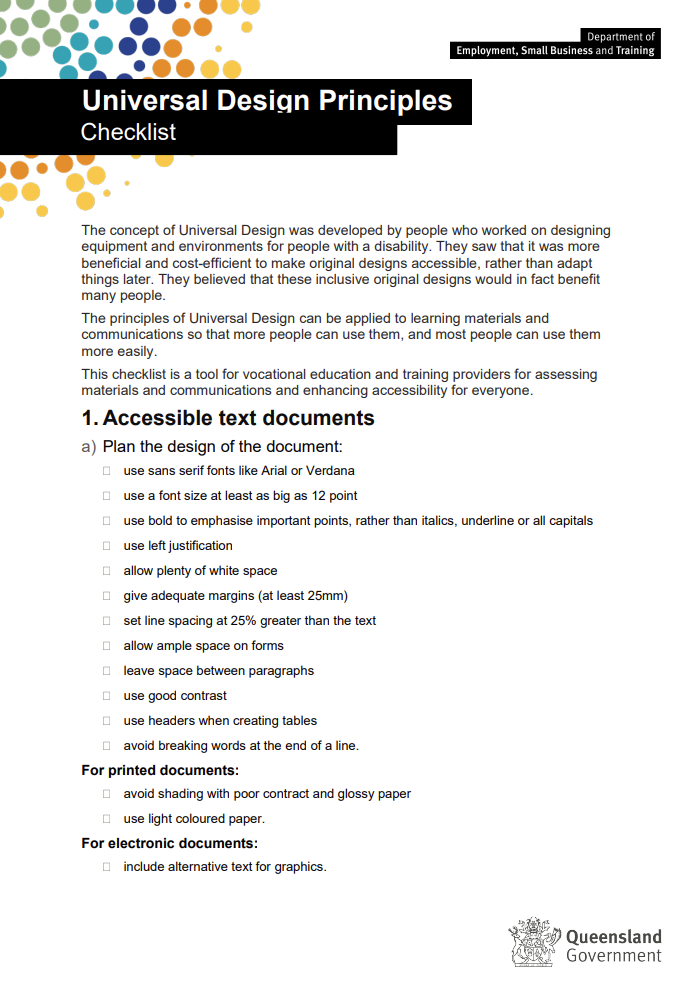
Universal Design Principles Checklist
Queensland Government, Department of Employment, Small Business and Training
Clear, accessible communication benefits all users, not just people with disability. This list is a tool for education and training providers but can be used more broadly to help you create written documents and oral presentations with enhanced accessibility.
Article
Museum design with equity and dignity
Centre for Universal Design Australia
This article presents an example of Universal Design in action. It highlights the different approaches museums have taken to designing and retrofitting for accessibility.
Co-Design
Fact Sheet
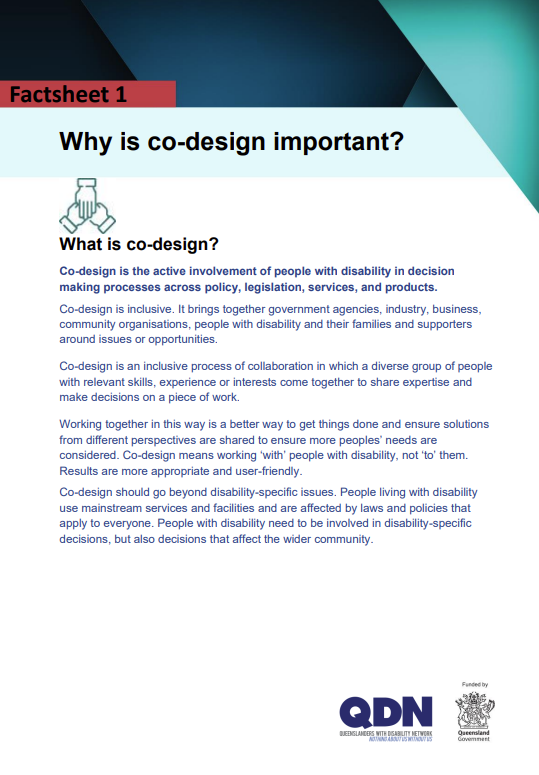
Why is co-design important?
Queenslanders With Disability Network (QDN)
This fact sheet was developed by QDN and can be found along with other factsheets in the co-design Training Resources on the Queensland’s Disability Plan (Qld Govt) webpage.
If you want to design something well, using universal design principles, then one helpful approach is co-design.
Co-design is about working with people who will use the place, service, or attend the event being created.
On a co-design team, people with lived experience, community members, researchers and professionals work together to:
- Improve something
- Make something new
- Find the solution to a problem
In this process, people will get to have a say in:
- What is needed
- What design is best
- What are the best ways to deliver
“Co-design offers a deeper understanding of the needs and experiences of people with lived experience.” Karin Brady
Video
The good, the bad and the ugly of co-design ft Karin Brady
Community Resource Unit Ltd.
Karin Brady (née Swift) shares from her extensive knowledge working in co-design. In this video, she shares the ‘good, bad and the ugly’ of a co-design process.
(Video Duration: 7m 24s)
Website
Queensland Stakeholder Engagement and Co-design Strategy
Queenslanders With Disability Network (QDN)
The aim of the Strategy is to ensure that people who are directly affected by disability reforms in Queensland have a real say in how those reforms are designed and put into practice.
QDN is working together with partner organisations to establish structures to put people with disability and stakeholders at the heart of reform processes through co-design.
Welcoming Communities
We all seek to feel like we belong. Many of us find a feeling of belonging in everyday community spaces and groups. This might be when we’re connecting with fellow swimmers at the pool, participating in a craft group or dance class, working at a market stall or chatting with other regulars at our local café. Finding common interests and people who are excited about the same things helps us feel connected.
Just like everyone else, people with disability want to belong and they don’t need separate groups or activities. People with disability can and should be welcome to join in local community spaces and clubs, just like everyone else. In this section we look at examples of things that communities can do to be more welcoming of all people.
Stories from Queensland
These are stories of people in Queensland, living great and ordinary lives in communities like Townsville, Mackay, Yeppoon, Mt Isa, Gatton and in the suburbs of Brisbane.
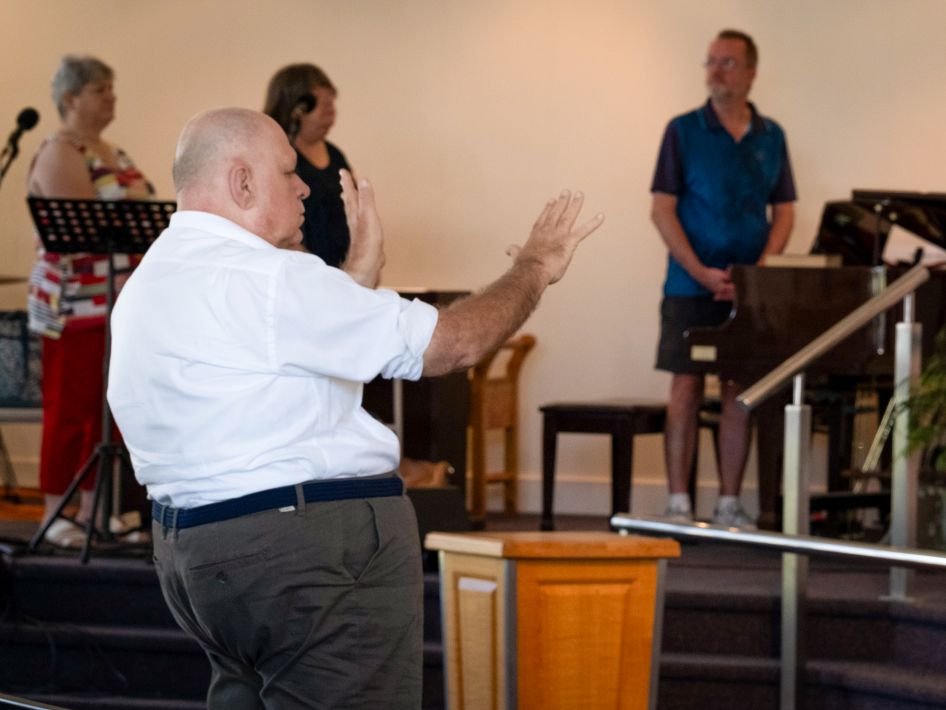
Tim the Church Member - Read more ▼
Tim is committed to his faith and community. Each Sunday he takes his familiar place in the front row at church and listens attentively. Known for his calm presence and willingness to help, Tim assists with packing up at the end of each service. He values routine, kindness, and spending time with his church community.
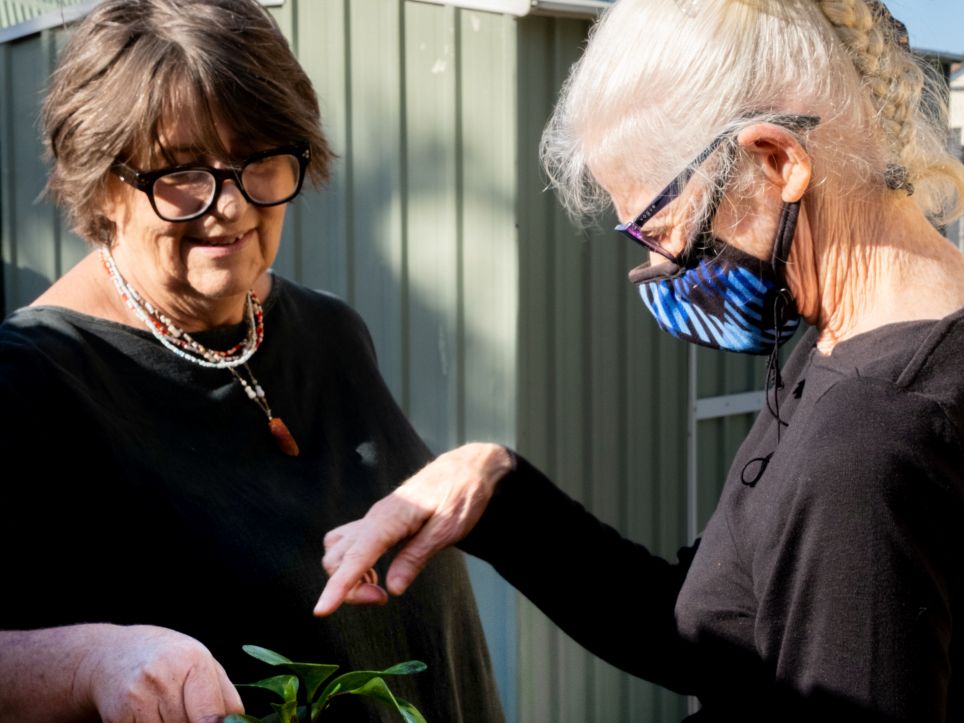
Myrtle the Gardener - Read more ▼
Myrtle is based in Mackay, she tends to her many plants each day and is well known in her local the community. She advertises via Facebook when plants are ready to sell bringing fellow plant enthusiasts to her home run plant stall.
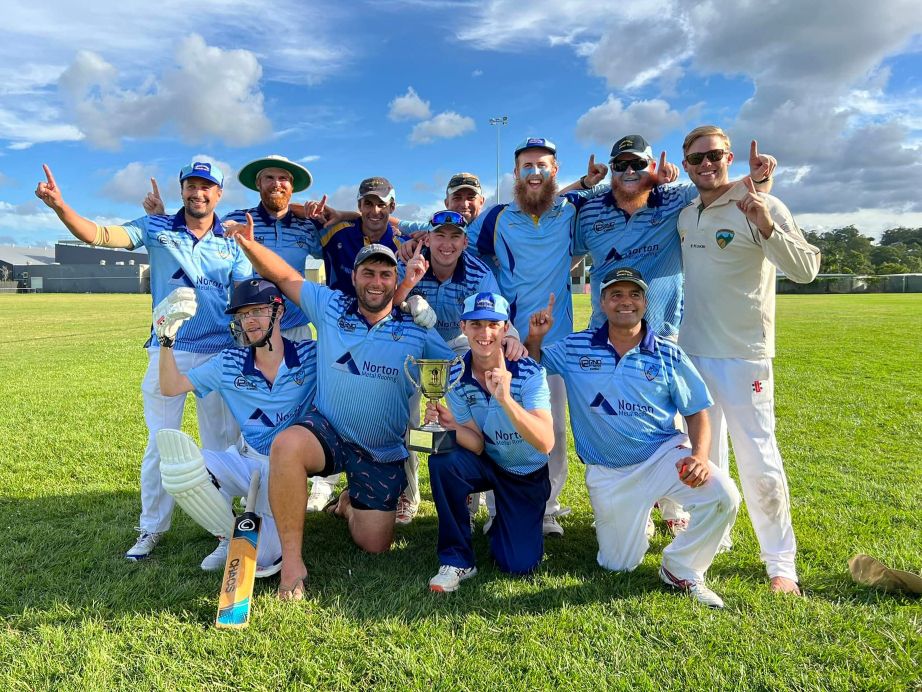
Dale the Cricketer - Read more ▼
Dale is a member of the Ashgrove men's T20 cricket team and has played with them for 5 years. He attends weekly training and plays games alongside his teammates during the summer cricket season. In 2022 Dale helped his team win the T20 premiership.
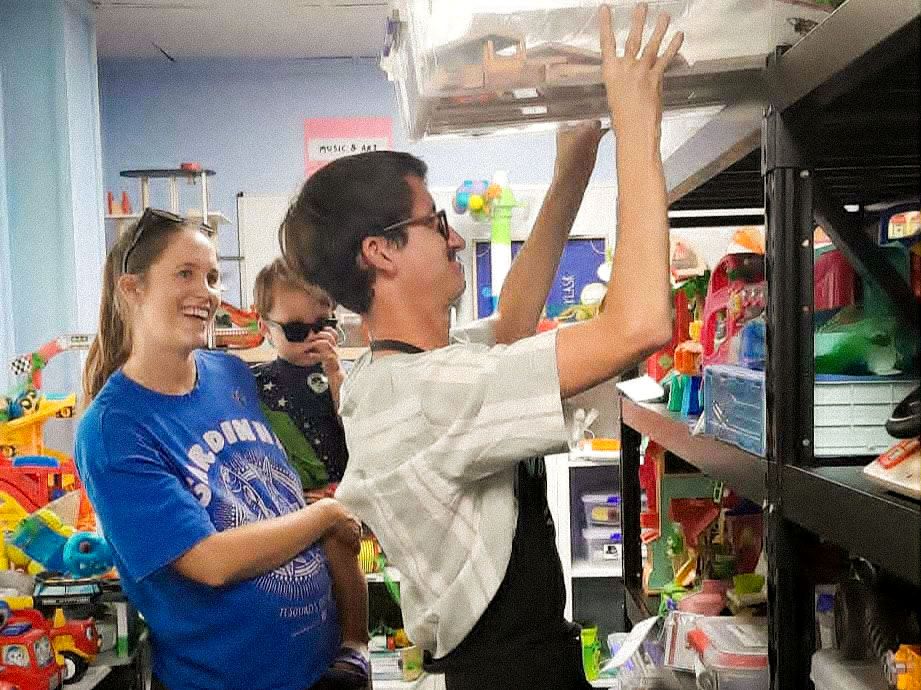
Phillip the Toy Librarian - Read more ▼
Phillip has been volunteering at the Capricorn Coast Toy Library Inc. since 2025. Being a volunteer and helping others is important to him and he enjoys doing a range of different tasks during his time there. Phillip is proud of his role because he can see how much the families enjoy visiting and the fun they have together with the items they borrow.
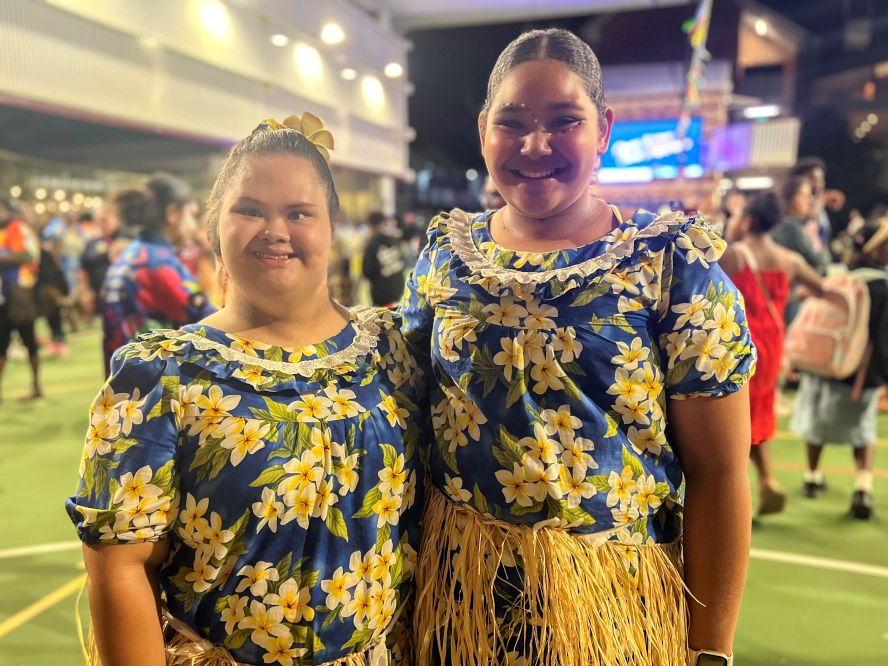
Kassidy the Cultural Dancer - Read more ▼
Kassidy is a member of the Torres Strait Island dance troupe at her high school, St Patrick's College. She attends dance training, learns from respected elders and performs at various events throughout the year, at the College and in the community. She has even performed for the North Queensland Cowboys NRLW team during the Indigenous Round last season!
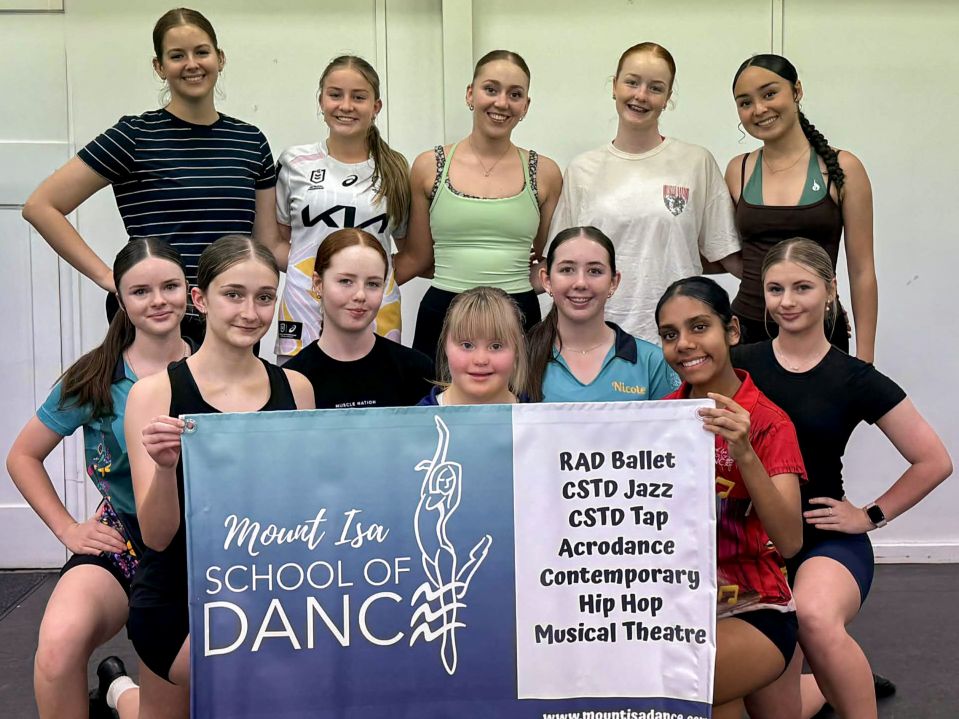
Sarah the Dancer - Read more ▼
Sarah has been involved with Mount Isa School of Dance since 2022 and has proudly performed in all four annual end-of-year concerts. Through dance, she has experienced genuine inclusion, friendship, confidence, and a strong sense of belonging. In 2025, she was especially excited to be given a character role in the concert, which reflected the school’s belief in her abilities and valued place within the team.
Sports and Physical Activity
Including everyone in team sports, clubs and classes.
All people should have the opportunity to access their local sports club, activity centre or exercise class. People with disability want to belong and they don’t need separate groups or activities.
Ask and listen
One step to inclusion is asking a person what would make your sports club or class more accessible to them – and really listening to their answer and implementing their suggestions wherever possible.
Inviting people to share about what would make the sport more accessible to them could happen through:
- a conversation
- an interview
- a simple form
Form
Participant Support Needs Form
Inclusive Sport Design
One example of a form is the Participant Support Needs Form created by Inclusive Sport Design. It asks about a person’s goals in sport, communication preferences, and what support would help them take part fully.
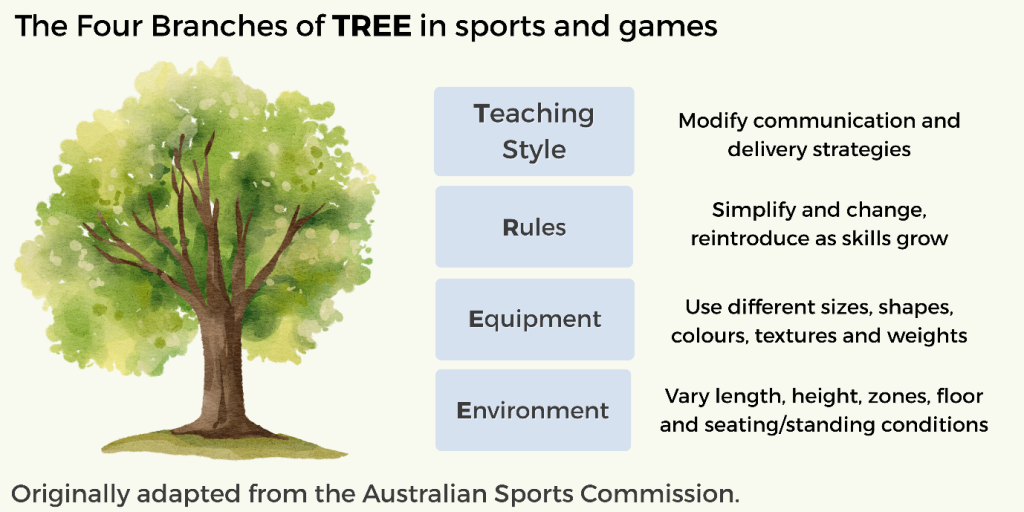
The TREE model
The ‘TREE’ acronym helps to adjust sports and games so that everyone can be included. It reminds us to consider:
- Teaching Style
- Rules
- Equipment
- Environment
Website
Using TREE
Australian Government Australian Sports Commission
This site contains more in-depth information on how we can apply the TREE framework.
Team sports
Team sports provide a wonderful opportunity for teammates to experience collaboration, shared accomplishment and to form strong bonds of friendship.
Mixed ability sports teams provide the chance for fellow students with and without disability to become teammates and learn cooperation, teamwork and most importantly, have fun together. Mixed ability sporting teams are harder to find but bring so many benefits to everyone involved.
Al’s story (below) is a wonderful example of inclusion in team sports.
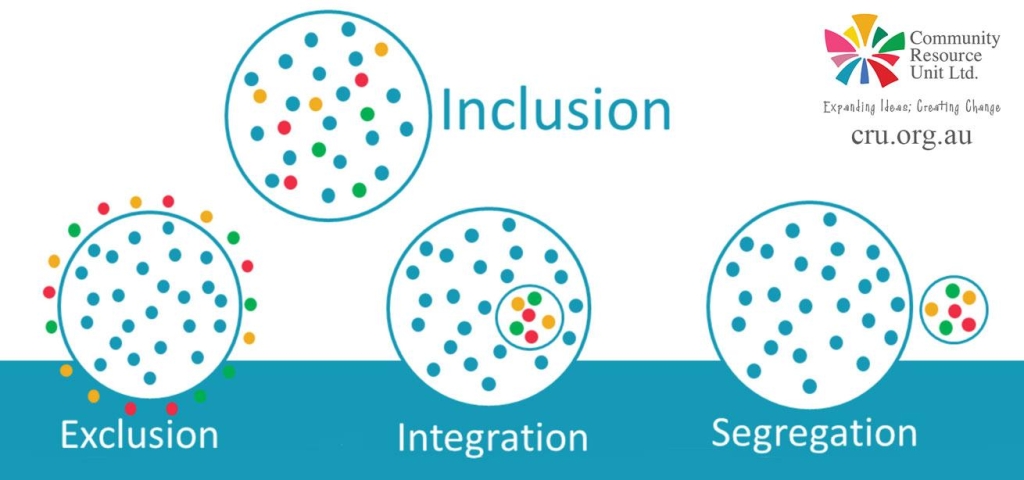
Inclusion
Due to a history of exclusion, our default can often be to separate the person or put people with disability together.
But inclusive adjustments are possible and have many benefits.
Video
Al’s Story
Family Advocacy
Al’s school has a strong commitment to inclusion. Al plays with his friends on the school soccer team and competes at the school swimming and athletics carnivals.
“Soccer down in the bottom oval was so much fun. Like, I remember quite a few times when he’d bring different types of chairs just to play soccer… he used to do little cheeky tricks where he’d just keep the ball with him and we can’t tackle him. So, he’ll just go off and score goals”
Fact Sheets
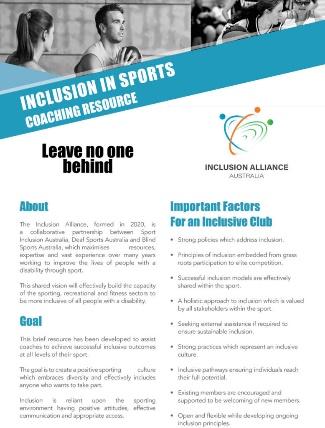
Inclusion Awareness Toolkits and Videos
Australian Sporting Alliance for People with a Disability
This page includes various fact sheets for sporting clubs, fitness coaches, instructors, businesses and school sports programs. The short videos featured also provide valuable guidance on promoting inclusive practices across sporting and recreational settings.
Webinars
Inclusion Education Series
Little Athletics Australia
A free series of webinars to assist Little Athletics Centres to be more inclusive. While aimed at athletics, the information shared is valuable for anyone in community sport.
An example
Swimming: How adaptations can benefit all
In swimming classes, children who are deaf or hard of hearing can sometimes experience communication barriers that can limit their participation.
Having visual cards that demonstrate a swim stroke is a universal design adaptation that will also benefit the other learners in the class. Visual cards can also be helpful for nervous swimmers, visual thinkers, non-verbal learners, learners who are new to the English language and those who benefit from consistency and predictability.
Swimming coaches can build their skills through training to make their service more inclusive. There are now self-paced online courses available for swimming coaches and other sports, making it easier to create open classes that are more welcoming and accessible.
Businesses, Services, Places and Events
Accessibility is not just about following the law. It’s also about making spaces, events and services that are welcoming. Inclusive businesses help more people join in with community life and being inclusive also helps build a good reputation, customer loyalty and trust. For companies across a wide range of industries, ensuring that you are welcoming and inclusive of all people makes good business sense.
What Can Businesses and Services Do?
Website
Companion Cards
Queensland Government
Businesses can consider offering reduced fees for people with disability and/or free support worker passes.
This is a way for an organisation or business to show they are committed to social inclusion and community access.
Employment Opportunities
Being employed isn’t just about making money (though that’s good, too!). It also helps us to feel more valued and included in our community.
Employment can lead to increased confidence, wellbeing and new friendships.
People with disability bring diverse skills, experience and strengths to workplaces. Employing a person with disability in a business or organisation makes good business sense. It also demonstrates a commitment to inclusive workplaces.
Website
Finding Your Job – Customised Employment
Community Resource Unit Ltd.
Roles and hours can be developed to suit a person’s unique skills and interests.
One approach is to start with the person, their unique skills and strengths, and match it with the needs of an employer.
Website
Workforce Evolve QLD | business.gov.au
Australian Government
The Workforce Evolve program can help employers develop their skills to increase diversity and enrich their workplaces.
The program is free for QLD business and includes online training, one-on-one coaching and resources.
There are many supports available to employers.
For more ideas and information on supports available for employers, see CRU’s Inclusive Employment - Resources for Employers webpage.
Workplace Adjustments
Changes can be made to workplaces to help people do their job safely and effectively.
This could include:
- Changes to the work area
- Changes to work hours or duties
- Purchase of equipment or services
In Australia, employers have a legal responsibility to provide reasonable adjustments for people with disability, unless doing so would cause serious difficulty or cost. Many adjustments are simple and low cost.
Website
Guidelines on reasonable adjustments
Australian Government
Provides further information on reasonable adjustments.
Video
Forget what you think you know about disability
Australian Broadcasting Commission (ABC) News In-depth
This video discusses workplace barriers and adjustments that were helpful for Nick, a litigation lawyer.
The video also explains how a shift away from a medical model towards the social model helps to reframe barriers to be a result of environmental factors and attitudes, rather than medical differences.
Emergency and Disaster Preparedness
People with disability can experience additional risks in disaster and emergency situations.
It is essential that businesses and services plan ahead and strengthen their preparedness and response strategies
Website
Disaster and emergency planning
Queenslanders with Disability Network (QDN)
QDN has undertaken significant work in this area.
More information and resources are available on their webpage:
Website
Brisbane 2032 Legacy and Impact
Brisbane 2032 Olympic and Paralympic Games
Accessibility has been named as a pillar of the Brisbane 2032 Olympic and Paralympic Games. The aim is to make these Games the most accessible in history.
The Games are bringing big investment in buildings and transport across Queensland. This is an important chance to make sure places and services – such as stadiums, public spaces and transport - are easy for everyone to use.
Report
Game Changers
Urbis and Queenslanders with Disability Network (QDN)
The Game Changers report shows that the Games could also help create more jobs for people with disability.
This can leave a strong inclusive employment legacy for Queensland.
Places, Events and Travel
Inclusive Places, Events and Travel
Accessibility is about much more than wheelchair ramps.
It is about planning carefully so everyone can take part.
Inclusive design considers many different needs. This includes:
- Physical accessibility – E.g. Public spaces, footpaths, transport and buildings should be easy to use for people with different types of mobility.
- Sensory inclusivity – E.g. Use audio signals at traffic lights, braille signs, captioning and Auslan interpreters. Create spaces that reduce loud noise, bright lights and sensory overload.
- Information accessibility – E.g. Information about transport, services and events should be easy to find, easy to read and easy to understand.
A truly inclusive approach cannot be reduced to a simple checklist.
It is better seen as a map or set of guiding ideas. Inclusive design is never really finished. It requires an ongoing willingness to listen, learn and improve.
Most importantly, to design inclusively we should start with people, rather than with rules. Working with people with disability in the design process (co-designing) is a powerful way to create a place, space or event that responds to local needs.
Fact Sheets
Queensland’s Disability Plan – Fact sheets and links
Fact Sheet 7 outlines the key relevant building codes and accessibility standards in Queensland.
Website
Access Consultants Association (ACA)
Access Consultants Association is the peak professional body in Australia for access and inclusion in the built environment.
ACA provides a database that helps you find and engage qualified accessibility consultants.
Website
Visual Story: How to access the MCA
Museum of Contemporary Art (Sydney)
This is an example of inclusive design.
The Museum of Contemporary Art in Sydney created a more accessible and inclusive gallery experience. To do this, they:
- developed a webpage containing a step-by-step guide for visitors. This guide contains photographs and written information (link is below).
- modified sound and lighting in gallery exhibits and surrounding areas.
- created a sensory map of the gallery.
- added a yellow path to help visitors know they were going the right way.
Website
Accessible Events
Queensland Government
Written guides and checklists for creating accessible events, as well as a video designed for event planners and tourist operators, explaining how to make events more accessible to all.
Video
Creating accessible events - for Queensland tourism and events businesses
Queensland Government
This video is designed to help tourism operators and event organisers learn how to make events more accessible for everyone.
Website
Accessible Tourism Enablers Grant
Queensland Government
A range of free online resources to enhance accessibility in tourism and events businesses.
Article
Travelling with a chair or three
Marlena Katene (Invacare)
Marlena writes about her experiences and adventures travelling the world.
Marlena (B. Communication Journalism), is an accomplished journalist, author and traveller.
Find out more about her work at marlenakatene.com.au
Technology, Communications and Accessibility
Communication
Not everyone communicates in the same way.
It’s always best to ask about a person’s communication preferences to learn what you can do to communicate better with them.
Info Sheet
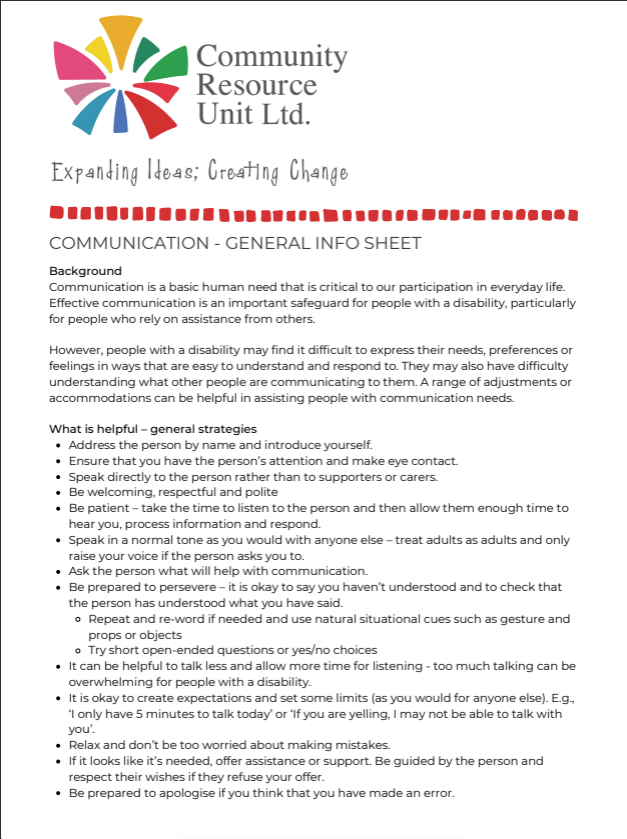
Communication – General info sheet
Community Resource Unit Ltd.
General information and helpful strategies to support respectful communication.
Fact Sheet
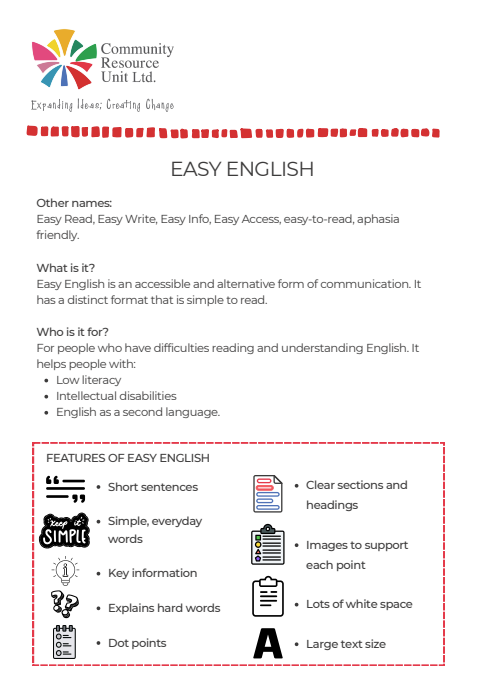
Easy and Plain English
Community Resource Unit Ltd.
A summary of the key features of Easy and Plain English and how they can be used.
Fact Sheet
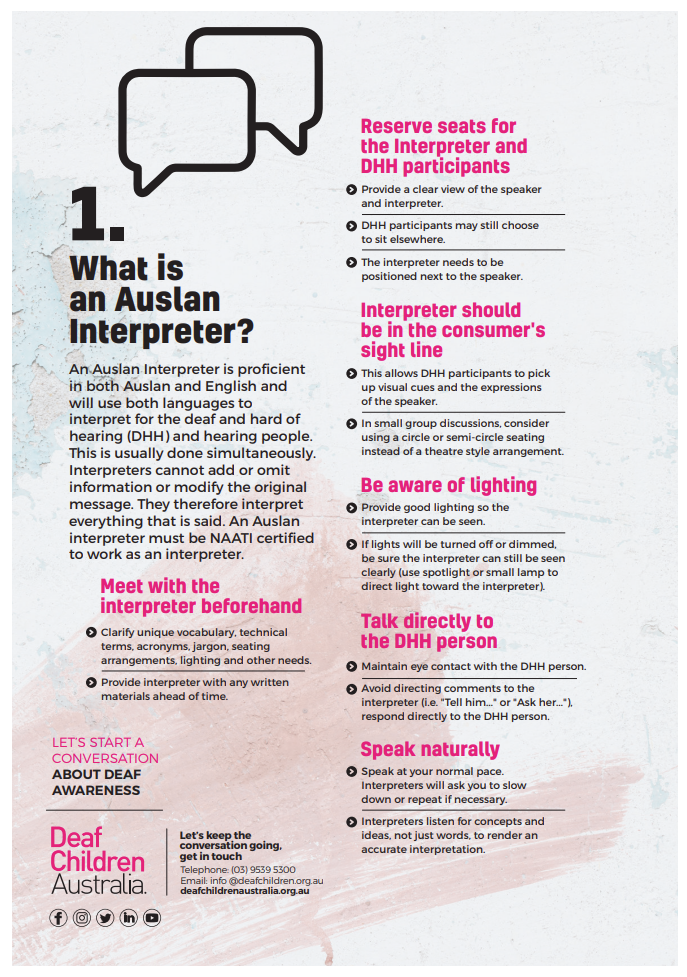
What is an Auslan Interpreter?
Deaf Children Australia
Information to be aware of when working with an interpreter.
Captioning
By turning audio and dialogue into written text, captions assist not only people who are deaf or hard of hearing, but also visual learners, people and watching videos in a public space or with poor sound quality.
Captions can also be created live at events (Live Captioning), which has the advantage of responding in real time to non-scripted events such as workshops and meetings.
Screen Readers
A screen reader is a software program that enables people who have low vision or are blind to read the content on a computer or portable device. Screen readers work by converting on-screen text, headings, buttons, links and alt text into spoken words or braille output.
Technology and Accessibility
Accessibility features of technology continue to evolve rapidly.
The below video shows how some people are making use of technology.
Video
I'm not remarkable
Apple
Directed by Australian woman Kim Gehrig for Apple, this short film celebrates disability and shows how people are making use of assistive technology features.
(Video Duration: 2m 51s)
Website
Language Guide
Australian Federation of Disability Organisations
A simple, straightforward language guide with clear examples.
PDF Guide
PWDA Language Guide
People with Disability Australia
A more in-depth guide for further context and examples.
Digital Accessibility
Digital services, such as webpages, tools and technology should be developed so that all people can use them, including people with disability.
This is a requirement under the Disability Discrimination Act 1992 and the Web Content Accessibility Guidelines (WCAG) 2.0AA.
The ways we engage with technology are diverse. Digital technologies are increasingly part of everyday life and communication, so it’s important to keep accessible design central.
Website
Accessibility Hub
Centre for Accessibility Australia
The Accessibility Hub outlines importance of digital access, how it applies to workers, and information about the WCAG standards. They also offer a free self-paced online course on Inclusive Digital Design.
Video
How Digital Accessibility Affects Me
Centre for Accessibility Australia
Hear from a range of people as they describe their digital access needs.
(Video Duration: 4m 31s)
Video
Perspectives Videos
W3C Web Accessibility Initiative (WAI)
WAI develop standards and support materials to help with understanding and implementing web accessibility.
WAI explain that web accessibility is “essential for people with disabilities, and useful for all”.
Through a series of short perspective videos, learn about the benefits and importance of accessibility features such as keyboard compatibility, video captions and good contrast.
Video
Abilities and Barriers - Physical Disabilities
W3C Web Accessibility Initiative (WAI)
This video explains some of the challenges that people with physical disability can face with technology, and some practical modifications that can make online platforms more accessible.
(Video Duration: 2m 28s)
Website
Accessibility and Inclusivity Toolkit - Basics
Digital NSW (NSW Government)
This webpage breaks down some of the recommendations in the Web Content Accessibility Guidelines (WCAG) into a list of ‘easy checks’.
Training
Introduction to Digital Accessibility
Vision Australia
A free on-demand course outlining the fundamentals of digital accessibility (52 minutes watch time).
Article
Tips for Online Meetings with AAC Users, by AAC Users
Communication FIRST
This article outlines some important access basics for meetings with Augmentative and Alternative Communication (AAC) users and others.
These include offering live captioning, interpretation, image descriptions, sharing materials in advance and the recording and transcript afterwards.
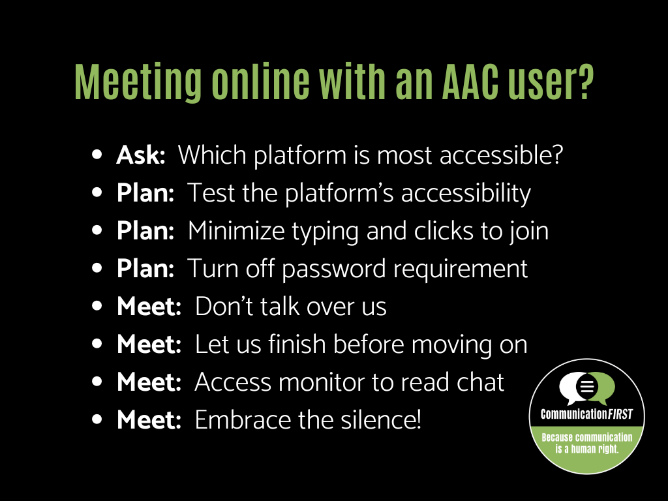
Image credit: Communication FIRST